

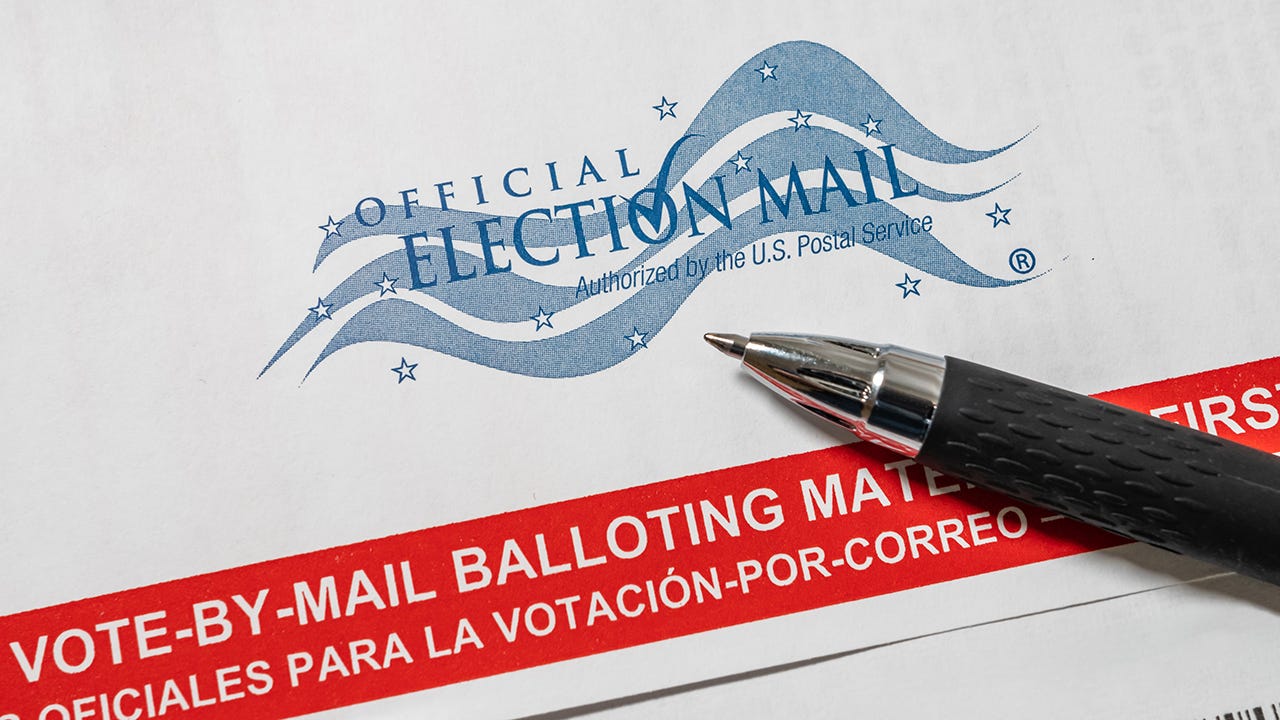
Imagine you do everything right: You fill out your mail ballot, sign it, and mail it the day before Election Day. The speed of mail being what it is, the ballot reaches your county election office two days later. Under your state’s rules, the ballot still counts even though it arrived after Election Day.
The Supreme Court is about to decide whether that’s still true in Watson v. Republican National Committee, and a decision could land as soon as tomorrow morning.
Watson is just one front in our wider fight. 2026 is a year when voting by mail is under attack from nearly every direction, as I explain below.
But it’s not all as bleak as it sounds, and in some ways our work is simple:
First, make sure everyone understands that each case—each attack—is all part of the same attempt by power-hungry politicians and their allies to silence our communities.
Second, make sure every friend, neighbor, and relative knows that they’re stronger than the people betting against them.
Third, this election, we all vote as an act of resistance.
Watson is a Case Voters Are Supposed to Win
Here’s the background: Over a dozen states (plus DC) count mail ballots postmarked by Election Day even if they arrive a few days later. The RNC sued to end that, arguing for a new rule that every ballot must reach the office by Election Day itself.
It’s a change that would fall hardest on the voters who already wait longest on the mail: troops and overseas citizens, and rural counties far from a fast post office.
When the Court took the case, election experts thought voters would win easily. Rick Hasen wrote in Slate that the case had Trump salivating, but that he might be disappointed in the Court’s decision. The constitution clearly says that states can make their own election rules unless Congress passes a federal law, and no federal law requires ballots to be received by Election Day. (As Justice Jackson noted, if Congress still has to pass a law to do it, the law doesn’t do it yet.)
Then came oral argument back in March, and the questions from the bench told a different story.
The conservative justices showed little interest in the legal question of what Congress did or didn’t do. One worried aloud about a “big stash” of ballots that could “radically flip” a result and shake public confidence—a fear that isn’t in any law, wasn’t the question before them, and misunderstands basic election procedure. By the end of the argument, SCOTUSblog reported the Court “appears ready” to strike the grace period.
This Isn’t an Isolated Headline, It’s a Coordinated Plot
Look at who’s coming after the freedom to vote, and when.
The executive branch has been at it for over a year. The President ordered the Postal Service to stop handling mail ballots in states that won’t hand over their voter data (multiple states are fighting that order). The Justice Department and ICE have gone after voter rolls and county records. (I wrote about that last week.) Congress is in as well: a bill at the President’s urging would ban states from counting late ballots, the same thing the RNC wants from the Court.
If Watson comes out bad, the right to vote will officially be under attack by all three branches of the federal government.
We already watched this Court gut the Voting Rights Act in Callais this spring, a decision we should name in the same disgusted breath as Citizens United. Watson would be the Court reaching past the maps and into your mailbox.
But wait, there’s more: last week the RNC and the Georgia GOP sued two metro-Atlanta counties, Fulton and Gwinnett, to shut down convenient ways for voters to return mail ballots. Same goal: fewer ways to vote by mail, implemented right before November.
Whichever way Watson lands, our right to vote by mail is under attack on every front.
We Have the Power to Respond
For now, do one thing: see the whole. The mail ballots, the voter rolls, the canceled primaries, the gutted Voting Rights Act. Seen together, they stop looking like individual bad headlines and start looking like a coordinated plan, run on purpose by people who know how much our votes matter—and how much risk our votes pose to those currently in power.
Think your vote doesn’t matter? They wouldn’t be fighting so hard to block your vote if it didn’t matter so much. We’re stronger than these attacks want us to feel, and what matters now—and what comes next—is up to us.
So keep your eye on the Court starting tomorrow morning. A great deal is about to be decided about a ballot you haven’t even mailed yet.